Fit for the next deployment: SCHÄFER Container Systems offers KEG service for volume reduction, refurbishment and retrofitting
News General news
Conversion of stainless steel returnable KEGs relieves inventories, simplifies processes and supports a future-ready returnable strategy
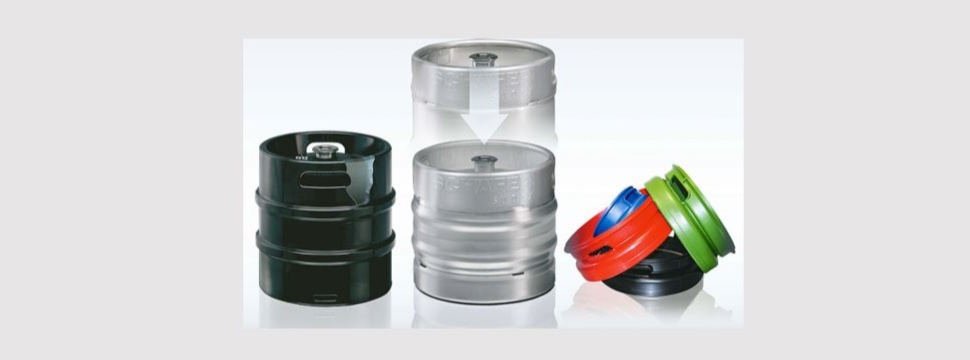
As one of the leading manufacturers, SCHÄFER Container Systems offers manufacturer-independent services for stainless steel returnable KEGs that keep containers functional in demanding applications and adapt them to new requirements. The range extends from repairs to PU cladding, sockets and weld seams through the replacement of PP rings as well as inspection and replacement of fittings, to logo neutralisation and new logo application. In addition, services include the refurbishment of chime and base rings, polishing as well as retrofitting with transponders for traceability and efficient container management.
A key focus of this service portfolio is volume reduction. Existing 50-litre stainless steel KEGs can be converted to smaller container sizes – typically 30 or 20 litres. This provides an additional, practical size without the need to replace or expand the KEG inventory.
Changing consumption behaviour: the market is becoming more diverse
The background is an increasingly differentiated beverage market. On the one hand, product ranges and variants are expanding; on the other hand, segments beyond beer – from water and soft drinks to juice, wine and ready-to-drink mixed beverages – are gaining importance. At the same time, the trend towards alcohol-free and more moderate offerings is growing. Manufacturers and operators must respond with adaptable container and dispensing concepts that reflect new product portfolios as well as enable more efficient logistics and operational processes.
Practical benefits of smaller containers in operation
Smaller KEGs directly support this adaptation: they enable greater product variety without increasing the total number of KEGs in use. At the same time, the lower weight reduces handling effort and lowers energy consumption during transport. The smaller volume also leads to shorter dwell times: containers are changed more quickly, allowing products to reach the tap faster and remain fresher until empty. The sustainability effect is immediate: by converting existing units, current inventories continue to be used instead of procuring new containers.
“Many breweries face the challenge of becoming more flexible with smaller container sizes without replacing their existing infrastructure,” explains Oliver Evering, Global Key Account Manager at SCHÄFER Container Systems. “Converting existing stainless steel KEGs is a pragmatic step to continue using inventories and adjust processes in a targeted way.”
More product variety, more requirements: containers must grow with operations
An expanding product range increases the pressure on containers that must be integrated safely, efficiently and economically into logistics and dispensing processes. Stainless steel returnable KEGs meet these requirements in practice: they are robust, stackable and designed for standardised processes. This makes storage and transport more predictable and efficient. Among other things, KEGs can be stored more compactly than bottles and, thanks to their stackability, make better use of truck capacity and warehouse space. As a closed system, KEGs also reliably protect the contents from light and oxygen ingress, which is crucial for maintaining consistent product quality until completely emptied.
EU PPWR: returnable systems become a strategic obligation
With regard to the EU Packaging and Packaging Waste Regulation (PPWR), returnable systems are moving even more strongly into focus. The increased requirements for waste prevention, reusability and recyclability raise the pressure to reduce single-use shares and expand reusable solutions. Stainless steel returnable KEGs support this development through their decades-long service life, material efficiency and recyclability, thereby helping to implement future requirements economically and in a practical manner.