Decorative Ingredients: The Aesthetic Additives in Tea
News News blog
Decorative ingredients are components in tea blends that serve solely to enhance the visual appeal. They have no effect on taste and do not influence the beverage’s aroma or health benefits. Instead, they give the tea an appealing, high-quality appearance—an important factor in purchasing decisions within the beverage industry.
What Exactly Are Decorative Ingredients?
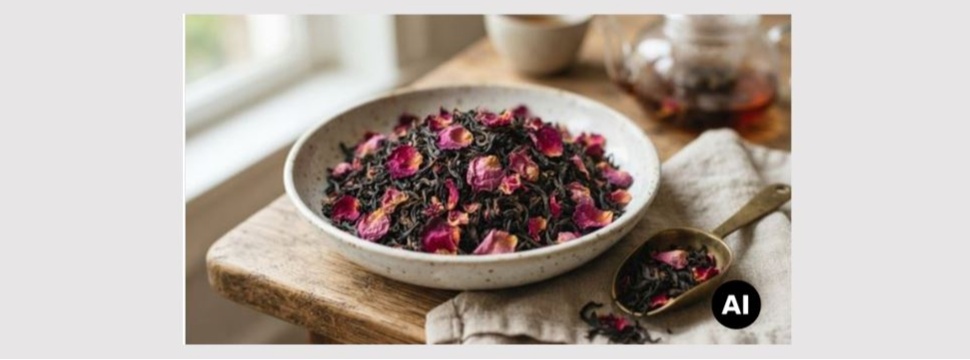
The term “decorative ingredients” refers to dried plant parts that are added to tea blends purely for aesthetic reasons. Flowers such as marigold, cornflower, mallow, and rose petals are particularly common. These colorful plant components stand out visually from the rest of the blend and add visual appeal.
Decorative botanicals serve no aromatic or therapeutic function. Their sole purpose is to make the product more attractive and convey an impression of quality and naturalness to the consumer.
Why does the tea industry use decorative botanicals?
The beverage industry uses decorative botanicals for several strategic reasons:
- Visual Enhancement
Colorful flowers make tea blends more visually appealing.
Customers associate colorful, natural ingredients with freshness, quality, and artisanal craftsmanship. A tea with vibrant cornflowers or delicate rose petals appears higher quality than a plain blend. - Product differentiation
In a saturated market, decorative ingredients help a product stand out from the competition. They give each tea a unique look and reinforce the brand identity. They play a particularly important role in the positioning of premium teas. - Emotional Appeal
Flowers evoke positive emotions and expectations. They suggest naturalness, purity, and enjoyment—values that are decisive for purchasing decisions in the beverage industry.
An Overview of the Most Popular Decorative Ingredients
- Cornflower blossoms add an intense blue to the blend and retain their color even after drying. They are particularly well-suited for light-colored teas.
- Calendula blossoms, with their orange to yellow petals, provide warm splashes of color and a subtle visual touch.
- Mallow blossoms captivate with their dark, purple, or red flowers, which stand out particularly well in rooibos or fruit teas.
- Rose petals lend elegant black or herbal teas a romantic visual depth and underscore their premium character.
Transparency for Consumers
Although decorative ingredients are flavorless, they contribute to the overall perception of the product. Manufacturers use them intentionally to create incentives for purchase. It is important for consumers to understand that these ingredients serve a purely decorative function—the tea experience itself is determined by the flavor-giving components.